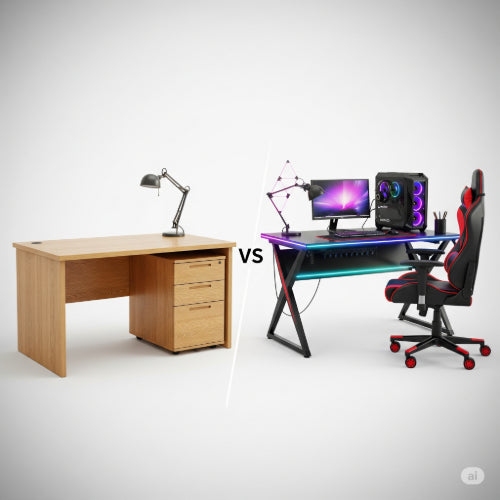
Office Desks vs. Gaming Desks: What’s the Best Option for Your Space?
The lines between our work and play spaces have become increasingly blurred. Many of us now use the same desk for intense work sessions during the day and immersive gaming adventures by night. This convergence has led to a common dilemma: should you invest in a dedicated office desk or a specialized gaming desk?
While both serve as surfaces to hold your computer and peripherals, they are designed with different primary objectives and offer distinct features. Understanding these differences is key to choosing the optimal desk for your personal space.
The Dedicated Office Desk: Form Meets Function
Traditional office desks are built with a focus on productivity, professionalism, and often, ergonomics.
Key Features:
- Ample Surface Area: Typically wide and deep, providing generous space for monitors, keyboards, mice, documents, and other work essentials.
- Clean Aesthetics: Often designed with a minimalist or professional look, commonly featuring wood, laminate, or metal finishes.
- Ergonomic Focus: Many modern office desks offer height adjustability (standing desk capabilities) to promote healthier work habits.
- Basic Cable Management: May include grommet holes or simple trays to help organize cables, but often less elaborate than gaming desks.
- Versatility: Designed to blend into various professional or home office environments.
Pros:
- Professional Appearance: Ideal for video calls or client meetings where a clean, uncluttered background is desired.
- Ergonomic Benefits: Standing desk options can significantly improve comfort and reduce strain during long work hours.
- Simplicity: Less visual clutter, allowing for greater focus on tasks.
- Durability: Often built to withstand daily use in a professional setting.
Cons:
- May lack specialized features for gaming peripherals (e.g., dedicated headphone hooks, cup holders).
- Can sometimes feel "boring" if you prefer a more dynamic aesthetic.
- Integrated cable management might be less sophisticated.
The Specialized Gaming Desk: Engineered for Immersion
Gaming desks are crafted with the gamer's specific needs and aesthetic preferences in mind, aiming to enhance the immersive experience.
Key Features:
- Optimized for Gear: Often includes features like monitor risers or specific cutouts for multiple monitors, headphone hooks, and even cup holders.
- Robust Construction: Frequently feature sturdy Z or K-shaped legs and reinforced frames to handle the weight of multiple monitors and vigorous gaming.
- Advanced Cable Management: Can incorporate built-in cable trays, routing channels, and power strip cubbies to keep wires tidy and out of sight.
- Aggressive Aesthetics: Often characterized by carbon fiber textures, bold colors, and integrated RGB LED lighting to match gaming peripherals and create an immersive atmosphere.
- Mouse Pad Surfaces: Some have full-desk mouse pads integrated into the surface.
Pros:
- Enhanced Gaming Experience: Features are tailored for gaming setups, improving organization and accessibility of gear.
- Striking Aesthetics: Creates a visually appealing and immersive gaming battlestation.
- Superior Stability: Built to withstand intense gaming sessions without wobbling.
- Integrated Conveniences: Headphone hooks, cup holders, and controller stands are practical additions.
Cons:
- Can appear less professional or "busy" for a dedicated work environment.
- RGB lighting and aggressive designs might not suit all interior décor.
- The specialized features might be unnecessary if gaming isn't your primary activity.
- Some models can have a larger footprint or less traditional shapes.
Which is Best for Your Space?
To make the right decision, consider these crucial factors:
-
Primary Use:
- Mostly Work: An office desk, especially a height-adjustable one, is likely your best bet for comfort, focus, and a professional look.
- Mostly Gaming: A gaming desk will provide the dedicated features and aesthetics to elevate your gaming experience.
- Hybrid (Work & Play Equally): This is where it gets interesting. A versatile office desk with good cable management might suffice, or a more understated gaming desk without excessive RGB might be a good compromise.
-
Ergonomics: Both types can be ergonomic, but office desks often put a stronger emphasis on adjustability for healthy posture during extended work hours. Look for height adjustability in either type if long sessions are common.
-
Space & Aesthetics: How much room do you have? Do you prefer a sleek, minimalist look, or a more dynamic, "techy" vibe? Ensure the desk's size and style complement your room's overall design.
-
Equipment Load: How many monitors do you use? Do you have large speakers, a bulky PC tower, or numerous peripherals? Ensure the desk's weight capacity and surface area can comfortably accommodate everything.
-
Budget: Gaming desks with all the bells and whistles can sometimes be more expensive, but there are competitive options in both categories.
Conclusion
Ultimately, the "best" desk is the one that most effectively supports your primary activities and fits seamlessly into your environment. If productivity, professional aesthetics, and ergonomic flexibility are paramount, an office desk will serve you well. If an immersive gaming experience, integrated gear organization, and a bold look are your priorities, a gaming desk is the way to go. For those balancing both, a careful look at hybrid designs or a feature-rich, yet understated, option from either category will lead you to your ideal command center.