Digital Signage vs. Traditional Signage: Which is Better for Your Business?
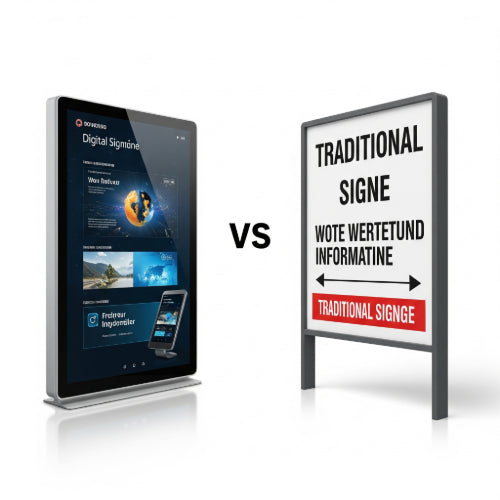
In the dynamic world of business communication, signs are paramount. They capture attention, convey messages, and guide customer behavior. For decades, traditional static signs were the only option. However, with the rapid advancement of technology, digital signage has emerged as a powerful contender. So, when it comes to choosing between digital and traditional, which is the better fit for your business? Let's break down the pros and cons of each.
Traditional Signage: The Time-Tested Classic
Traditional signage encompasses everything from painted signs, vinyl banners, illuminated lightboxes, and printed posters.
Pros:
- Cost-Effective Upfront: Generally, the initial investment for a traditional sign is lower than a digital display, especially for simple designs and materials.
- No Power Required: Many traditional signs (like banners or storefront letters) don't need electricity, making them ideal for outdoor placements or areas without power access.
- Durability: Depending on the material, traditional signs can be incredibly durable and weather-resistant, requiring minimal maintenance after installation.
- Simplicity: Once installed, there's no software to manage, no updates to perform, and no complex troubleshooting.
- Tangible Presence: A well-crafted traditional sign can convey a sense of permanence and classic appeal.
Cons:
- Limited Flexibility: Once printed, the message is fixed. Changing content requires creating and installing a new sign, which can be costly and time-consuming.
- Less Engaging: Static images, while informative, can be less attention-grabbing than dynamic digital content.
- No Interactivity: Traditional signs offer no way to engage with the audience or collect data.
- Physical Wear and Tear: Over time, colors can fade, materials can degrade, and signs can become outdated, requiring replacement.
- One Message at a Time: You can only display one message or promotion at a given time.
Digital Signage: The Modern Powerhouse
Digital signage involves using LCD, LED, or projection displays to show dynamic content like videos, animations, scrolling text, and interactive elements.
Pros:
- Dynamic and Engaging: Moving images, videos, and animations are far more effective at capturing attention and retaining viewer interest than static displays.
- Instant Content Updates: Content can be changed in real-time from a central location, allowing for immediate promotions, news updates, or emergency alerts.
- Multiple Messages: A single screen can display a virtually unlimited number of messages, schedules, menus, or promotions in a rotating playlist.
- Interactivity: Touchscreens allow for interactive experiences, such as wayfinding, product catalogs, customer feedback, or self-service kiosks.
- Targeted Messaging: Content can be scheduled to change based on time of day, audience demographics, or even external triggers like weather, allowing for highly relevant messaging.
- Reduced Long-Term Costs: While the initial investment is higher, the ability to update content without printing new materials can lead to significant long-term savings.
- Data and Analytics: Some digital signage platforms offer analytics on content viewership, helping businesses understand what resonates with their audience.
Cons:
- Higher Upfront Cost: Displays, media players, software licenses, and professional installation can represent a significant initial investment.
- Power Dependent: Digital signs require continuous power, and a power outage means your sign goes blank.
- Technical Complexity: Managing software, scheduling content, and troubleshooting potential technical issues requires some level of technical understanding or dedicated IT support.
- Maintenance: Displays can gather dust, require occasional cleaning, and may need firmware or software updates.
- Lifespan: While designed for durability, electronic components have a finite lifespan and can be susceptible to environmental factors if not properly protected (e.g., direct sunlight, extreme temperatures).
Which is Better for Your Business?
The "better" choice truly depends on your specific business needs, budget, and goals:
-
For static, long-term branding: If your primary goal is a permanent business name or logo that rarely changes, traditional signage is often the more economical and straightforward choice. Think storefront names, building directories, or basic wayfinding.
-
For dynamic promotions, information, and engagement: If your business regularly updates promotions, needs to display changing information (e.g., menus, schedules, wait times), aims to entertain or inform customers, or seeks interactive experiences, digital signage offers unparalleled flexibility and impact. Think restaurants, retail stores, corporate lobbies, healthcare facilities, or transportation hubs.
Many businesses find success by using a hybrid approach, leveraging traditional signage for permanent branding and digital signage for dynamic, attention-grabbing content and promotions.
Ultimately, assess your budget, consider how frequently your message needs to change, and think about the level of engagement you want with your audience. Both traditional and digital signage have their place, but understanding their distinct advantages will help you make the best decision for your business's communication strategy.