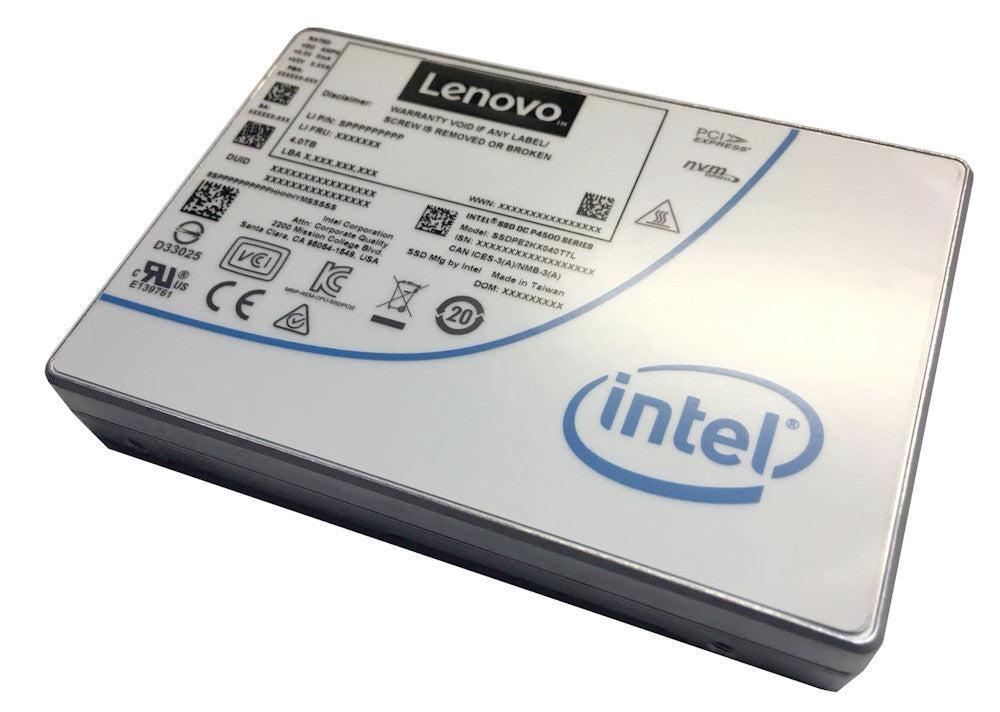
Non-Volatile Memory Express (NVMe) is new PCIe 3.0 high performance SSD technology that provides high I/O throughput and low latency. NVMe interfaces remove SAS/SATA bottlenecks and unleash all of the capabilities of contemporary NAND flash memory. Each NVMe PCI SSD has direct PCIe 3.0 x4 connection, which provides at least 2x more bandwidth and 2x less latency than SATA/SAS-based SSD solutions. NVMe drives are also optimized for heavy multi-threaded workloads by using internal parallelism and many other improvements, such as enlarged I/O queues.
The key metric for solid state drives is their endurance (life expectancy). SSDs have a huge, but finite, number of program/erase (P/E) cycles, which determines how long the drives can perform write operations and thus their life expectancy. Performance SSDs have better endurance than Mainstream SSDs, which in turn have better endurance than Entry SSDs.
SSD write endurance is typically measured by the number of program/erase cycles that the drive can incur over its lifetime, which is listed as TBW in the device specification. The TBW value that is assigned to a solid-state device is the total bytes of written data that a drive can be guaranteed to complete. Reaching this limit does not cause the drive to immediately fail; the TBW simply denotes the maximum number of writes that can be guaranteed.
A solid-state device does not fail upon reaching the specified TBW, but at some point after surpassing the TBW value (and based on manufacturing variance margins), the drive reaches the end-of-life point, at which time the drive goes into read-only mode. Because of such behavior, careful planning must be done to use SSDs in the application environments to ensure that the TBW of the drive is not exceeded before the required life expectancy.
For example, the 1.0 TB P4500 drive has an endurance of 1,380 TB of total bytes written (TBW). This means that for full operation over five years, write workload must be limited to no more than 756 GB of writes per day, which is equivalent to 0.75 full drive writes per day (DWPD). For the device to last three years, the drive write workload must be limited to no more than 1,260 GB of writes per day, which is equivalent to 1.3 full drive writes per day.