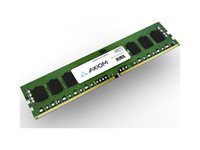
The AXIOM DDR5 64GB RDIMM module is a high-density memory upgrade built for servers and professional workstations that demand speed, reliability, and uptime. Designed to handle data-intensive workloads, it combines enterprise-grade reliability with the performance needed for modern applications.
-
Capacity: 64GB per module to handle large datasets, virtualization, and heavy multitasking
-
Memory Type & Form Factor: DDR5 RDIMM (Registered DIMM) for server-grade hardware and qualified reliability
-
Speed: 6400MHz data transfer rate for faster memory bandwidth and improved application responsiveness
-
ECC: Error-Correcting Code enhances data integrity and system stability in demanding environments
-
Voltage: 1.1V operation for improved power efficiency and cooler operation
-
Deployment Focus: Optimized for data centers, virtualization hosts, and professional workstations requiring consistent performance
This memory module translates to tangible benefits: faster data access, smoother multitasking, and more predictable performance under load. ECC protection helps minimize downtime from memory errors, while the higher density supports larger memory footprints in a single module—reducing the need for numerous DIMMs and freeing up slots for future expansion.
Specs
-
Capacity: 64GB
-
Type: DDR5 RDIMM
-
Speed: 6400MHz
-
Voltage: 1.1V
-
ECC: Yes
-
Form Factor: RDIMM
FAQ
-
Is this module compatible with standard DDR5 slots?
Yes. It is designed for systems that support DDR5 RDIMM memory.
-
What does ECC mean?
ECC stands for Error-Correcting Code. It detects and corrects common types of internal memory errors to improve stability and data integrity.
-
Can this memory be used in gaming PCs?
It is primarily intended for servers and workstations, but it can be used in compatible high-end systems that support DDR5 RDIMM memory.
-
Does the 1.1V voltage reduce power consumption?
Yes. Operating at a lower voltage contributes to improved energy efficiency and reduced heat output.
-
How does increased component density benefit performance?
Higher density enables larger memory configurations, supporting more demanding applications and workloads such as large databases, virtualization hosts, and in-memory analytics.