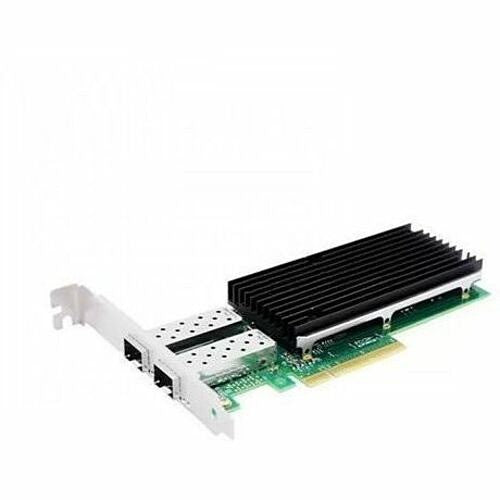
The AXIOM PCIE4-2SFP28-AX dual-port NIC card delivers 25G wired connectivity for data centers and enterprise networks. Built for IT professionals who demand reliable, high-throughput performance, it combines PCIe 4.0 x8 bandwidth with the Intel E810 chipset to support demanding workloads with low latency.
-
Interface: PCIe 4.0 x8 connection provides ample bandwidth for high-throughput traffic.
-
Ports: Dual SFP28 interfaces, each supporting up to 25 Gbps, for flexible uplink/downlink configurations.
-
Chipset: Intel E810 ensures stable, enterprise-grade networking performance.
-
Power Consumption: Efficient operation at 13.7W to minimize server power impact.
-
Warranty: 3 Year Limited Warranty for peace of mind.
-
Compatibility: Requires a PCIe 4.0 x8 slot to realize full performance.
With dual 25Gbps SFP28 ports, this NIC card boosts network throughput and helps reduce latency in busy data centers, virtualization hosts, and storage networks. The Intel E810-based design offers dependable, consistent performance under load, while the power-efficient profile helps manage total cost of ownership in enterprise environments. It’s a solid choice for servers and workloads that demand fast, reliable interconnects without sacrificing efficiency.
Specs
-
Interface: PCIe 4.0 x8
-
Ports: Dual SFP28
-
Speed: Up to 25 Gbps per port
-
Chipset: Intel E810
-
Power Consumption: 13.7W
-
Warranty: 3 Year Limited Warranty
FAQ
-
Q: What speeds does this NIC support per port?
A: Each of the two SFP28 ports supports up to 25 Gbps, enabling high-throughput links per connection.
-
Q: What slot do I need?
A: A PCIe 4.0 x8 slot is required to achieve full performance from this card.
-
Q: How much power does it consume?
A: Typical power consumption is 13.7W, helping to keep server power usage efficient.
-
Q: What warranty comes with the product?
A: It includes a 3 Year Limited Warranty from AXIOM.
-
Q: Is it suitable for data centers and enterprise networks?
A: Yes. It’s designed to boost throughput and reduce latency in data centers, virtualization environments, and other enterprise networking scenarios.