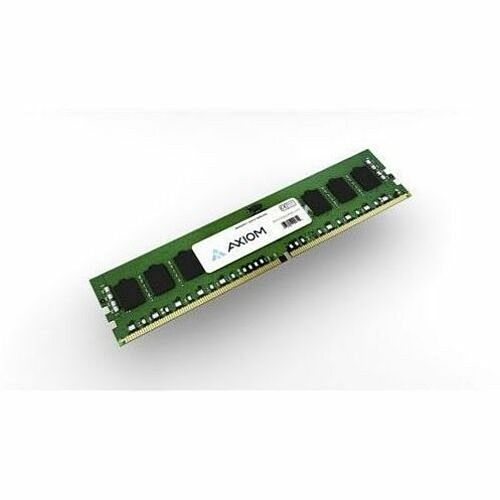
Upgrade Dell servers with AXIOM's 256GB DDR5-4800 ECC RDIMM. Designed for data-heavy workloads, this memory module delivers fast, reliable performance with enterprise-grade error correction.
-
Capacity: 256GB per module for large datasets and virtualization
-
Memory Type & Speed: DDR5-4800 with high bandwidth for quicker data access
-
ECC: Built-in Error-Correcting Code to detect and correct single-bit memory errors
-
Form Factor: RDIMM, optimized for server environments
-
Compatibility: Specifically engineered to fit Dell systems that support 370-AHCO modules
-
Reliability: Tested and validated for consistent operation in demanding workloads
This module helps unlock better system responsiveness, reduces memory-related bottlenecks, and supports memory-intensive applications like databases, virtual machines, in-memory analytics, and large-scale caching. With ECC, you get improved data integrity, lower risk of silent failures, and safer operation in 24/7 deployments. The Dell-targeted design ensures compatibility and straightforward deployment in your Dell server ecosystem.
Specs
-
Brand: AXIOM
-
Module Type: 256GB DDR5-4800 ECC RDIMM
-
Capacity: 256GB
-
Speed: DDR5-4800 (4800 MT/s)
-
ECC: Yes
-
Form Factor: RDIMM
-
Compatibility: Dell servers supporting 370-AHCO memory modules
-
Target Use: Data-center servers, virtualization, large databases, and memory-heavy workloads
FAQ
-
Q: What capacity does this module provide?
A: 256GB per module, suitable for heavy workloads and large datasets.
-
Q: Is it compatible with my Dell server?
A: It’s designed for Dell systems that support 370-AHCO modules, ensuring plug-and-play compatibility in the right chassis.
-
Q: What does ECC do?
A: ECC detects and corrects single-bit memory errors automatically, improving data integrity in critical applications.
-
Q: Can this RAM be used in a production server?
A: Yes. RDIMM memory is specifically intended for server environments where reliability and stability are essential.
-
Q: How does DDR5-4800 impact performance?
A: DDR5-4800 provides higher bandwidth and improved efficiency, helping data-heavy workloads move faster and reducing latency in memory-bound operations.