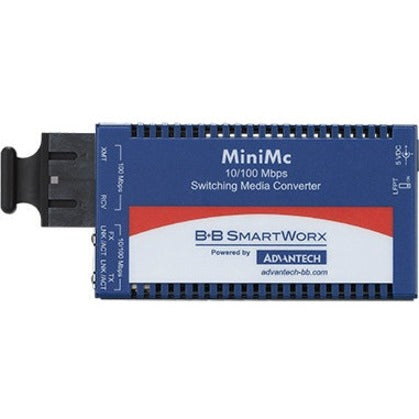
This fiber ethernet switches solution is perfect for network administrators and IT professionals who need 100Mbps multimode fiber connectivity with USB-A interface. Our IMC-350-USB-A delivers:
-
Network switch fiber optic technology that extends Ethernet over fiber distances
-
Fiber optic cable connector types compatibility with standard SC connectors
-
USB networking cable interface for easy plug-and-play installation
-
850nm multimode LFPT transmission for reliable data communication
Key Features
-
100Mbps Fast Ethernet to multimode fiber conversion
-
850nm wavelength optimized transmission performance
- Standard SC connector for universal fiber compatibility
- Consistent LFPT (Link Fault Pass Through) for network integrity
-
USB-A interface to meet modern connectivity requirements
Technical Specifications
| Manufacturer |
IMC Networks |
| Model Number |
IMC-350-USB-A |
| Type |
Fiber Ethernet Media Converter |
| Data Rate |
100Mbps Fast Ethernet |
| Fiber Type |
Multimode 850nm wavelength |
| Connector Type |
SC connector for fiber, USB-A for power/management |
| Features |
LFPT (Link Fault Pass Through) support |
| Compatible Systems |
Ethernet networks, fiber optic infrastructure |
Frequently Asked Questions
Q: What fiber optic cable connector types work with this media converter?
A: The IMC-350-USB-A features standard SC connectors that are compatible with most multimode fiber optic installations and provide secure, reliable connections.
Q: How does this fiber ethernet switches solution improve my network?
A: Yes, it's engineered for 100Mbps Fast Ethernet extension over fiber optic cables. This allows you to overcome copper cable distance limitations while maintaining high-speed connectivity.
Q: What makes the USB-A interface beneficial for installation?
A: The USB networking cable interface provides convenient power delivery and management capabilities — perfect for plug-and-play fiber network deployment.
Q: Does this support LFPT for network monitoring?
A: Yes. Link Fault Pass Through (LFPT) functionality ensures that link failures are properly communicated across the fiber connection, maintaining network visibility and troubleshooting capabilities.