Sound Systems vs. Speakers: Which One Is Better for Your Office?
In any modern office, effective audio is more than just a luxury; it's a critical component for clear communication, productive collaboration, and even setting the right ambiance. Whether it's for video conferences, background music, presentations, or company-wide announcements, getting your audio setup right can significantly impact your team's experience.
When considering office audio, you might encounter terms like "sound systems" and "speakers." While speakers are undoubtedly a part of any sound solution, a "sound system" typically implies a more comprehensive, integrated, and often centralized approach. Let's clarify the distinction and explore which option might be best for your office.
What's the Difference?
-
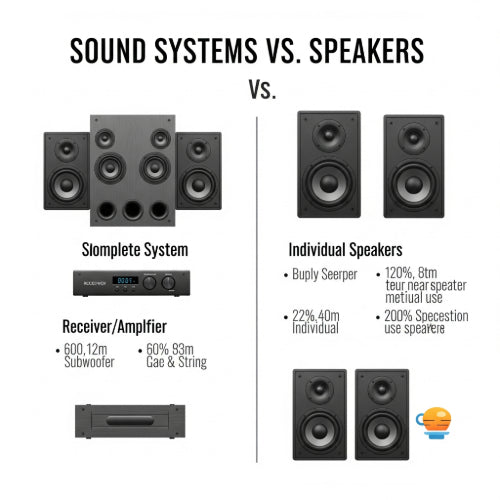
Speakers (Individual/Standalone): These are the output devices that produce sound. They can range from small desktop speakers connected directly to a computer, to a single soundbar, or even a portable Bluetooth speaker. They are designed to deliver audio from a single or very limited set of sources and are often localized to a specific workstation or small huddle area.
-
Sound System (Integrated/Commercial): This refers to a more comprehensive audio solution that typically involves multiple components working together. Beyond just the speakers, a sound system often includes:
-
Amplifiers: To boost audio signals to a level suitable for multiple speakers.
-
Mixers: To combine and balance audio from various sources (microphones, music players, computers).
-
Processors/DSPs: For advanced audio shaping, room correction, and feedback suppression.
-
Multiple Speakers: Strategically placed (e.g., ceiling-mounted, wall-mounted, pendant speakers) for even sound distribution across larger or multiple zones.
-
Control Systems: For centralized management of volume, sources, and zones.
-
The Case for Individual Speakers: Simplicity and Localized Control
Pros:
-
Simplicity & Ease of Setup: Often plug-and-play. Desktop speakers or a soundbar can be connected to a computer or monitor in minutes.
-
Cost-Effective for Small Scale: For individual workstations or very small, informal meeting spaces, buying a pair of quality desktop speakers or a soundbar is far more economical than a full system.
-
Personalized Audio: Allows individual employees to control their own audio output without affecting others, ideal for individual work or personal calls in an open-plan environment.
-
Portability: Many standalone speakers (especially Bluetooth models) are highly portable, useful for impromptu huddle sessions or moving between desks.
Cons:
-
Limited Coverage & Sound Quality: Individual speakers struggle to provide consistent, high-quality audio across larger rooms or open-plan offices. Sound can be uneven, leading to "hot" and "dead" spots.
-
Lack of Central Control: Managing audio across multiple individual speakers in different areas is cumbersome and inefficient.
-
Clutter: Multiple standalone speakers can add to desk clutter and cabling issues if not managed carefully.
-
Not Scalable: Difficult to expand for larger areas or integrate with complex audio needs like multiple microphones or zoned music.
-
Subpar for Conferences: While some speakerphones exist, basic individual speakers are usually insufficient for clear, room-filling audio and microphone pickup in dedicated conference rooms.
The Case for an Integrated Sound System: Power and Professionalism
Pros:
-
Superior Audio Quality & Coverage: Designed for even sound distribution, an integrated system ensures clear, consistent audio throughout a space, minimizing echoes and dead zones. This is critical for intelligible presentations and effective background music.
-
Professionalism: A well-designed system looks clean and often involves discreetly mounted speakers (e.g., in-ceiling), enhancing the office aesthetic.
-
Centralized Control & Zoning: A single control panel or software interface can manage audio for different areas (e.g., a quiet zone, a loud breakroom, multiple conference rooms), allowing for different audio sources and volumes in each zone.
-
Scalability & Flexibility: Can be designed to fit current needs and easily expanded or reconfigured as the office grows or its audio requirements change.
-
Optimized for Conferences & Meetings: Integrated systems often include high-quality microphones, echo cancellation, and noise reduction, making video conferences and presentations exceptionally clear for all participants, both in-room and remote.
-
Multi-Source Integration: Easily connects and switches between various audio sources like laptops, microphones, streaming services, and public address systems.
-
Durability & Reliability: Commercial-grade components are built for continuous use and offer greater longevity.
Cons:
-
Higher Initial Investment: Designing and installing a full sound system is a more significant upfront cost due to the components, cabling, and professional installation often required.
-
Complexity: While user-friendly once set up, the initial design and installation of an integrated system can be complex and typically requires professional expertise.
-
Less Portable: Integrated systems are fixed installations, not designed to be moved easily.
Which One Is Better for Your Office?
The "better" choice hinges on your office's specific needs, size, and budget:
-
Choose Individual Speakers if:
-
You have a very small office, a home office, or individual desk setups.
-
Your primary need is personal audio or basic sound for individual video calls.
-
Your budget is limited, and simplicity is key.
-
You don't need consistent audio coverage across a large space.
-
-
Choose an Integrated Sound System if:
-
You have dedicated conference rooms, boardrooms, or training rooms where clear communication is paramount.
-
You want consistent background music or announcements across an open-plan office, reception area, or multiple zones.
-
You host frequent video conferences with multiple in-room participants.
-
You value a professional aesthetic with discreetly installed audio.
-
You require robust, scalable, and centrally managed audio solutions.
-
Your budget allows for a higher initial investment for long-term benefits and performance.
-
Often, a Hybrid Approach is Best:
Many offices find that a combination works best. Individual speakers or quality speakerphones can serve huddle rooms and individual workstations, while a professionally designed, integrated sound system handles the larger conference rooms, open office areas, and common spaces.
By carefully evaluating your audio requirements, the size and layout of your office, and your budget, you can select the sound solution that truly enhances collaboration, communication, and the overall working environment for your team.