Projectors vs. TVs: Which is Better for Office Presentations?
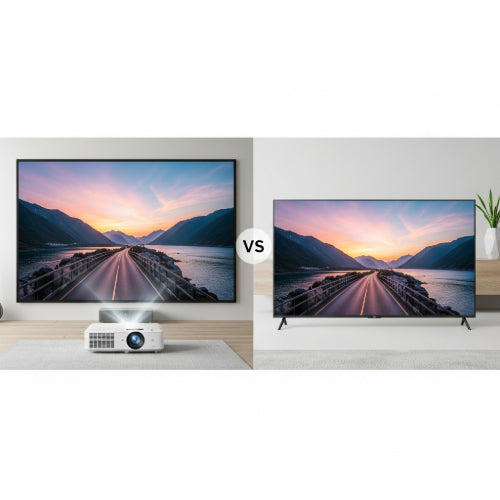
Delivering a compelling presentation often hinges on clear and impactful visuals. In today's meeting rooms, the choice of display boils down to two main contenders: projectors and televisions (TVs). Both have their strengths and weaknesses, and the "better" option truly depends on your specific needs and the characteristics of your presentation space.
Let's dive into a comparison to help you decide which display technology will best serve your office presentations.
Projectors: The Big Screen Specialists
Projectors work by projecting an image onto a screen or wall, typically offering a significantly larger display size compared to TVs.
Pros:
- Large Screen Size: This is the most significant advantage. Projectors can easily create images of 80 inches or more, making them ideal for large audiences and detailed visuals.
- Scalability: You can often adjust the screen size by moving the projector closer or further from the screen.
- Portability (for some models): Many portable projectors are available, making them easy to transport between meeting rooms or even off-site.
- Cost-Effective for Large Displays: Achieving a very large screen size with a TV can be significantly more expensive than with a projector.
- Flexibility in Placement: Projectors can be ceiling-mounted, placed on a table, or even used with short-throw lenses to minimize distance from the screen.
Cons:
- Image Quality Dependent on Ambient Light: Brightly lit rooms can wash out the projected image, making it difficult to see. Dimming the lights is often necessary.
- Screen Requirement: A dedicated projection screen is usually recommended for optimal image quality, adding to the setup cost and effort. Projecting on a bare wall can sometimes result in a less sharp and vibrant image.
- Lamp Life and Maintenance: Traditional projectors use lamps that have a limited lifespan and require periodic replacement, incurring additional costs. Newer laser and LED projectors offer much longer lifespans.
- Lower Brightness (compared to TVs): While projector brightness is improving, they generally don't reach the same levels of brightness as modern TVs.
- Potential for Shadows: Presenters walking in front of the projector can cast shadows on the screen.
Best Use Cases for Projectors:
- Large Meeting Rooms and Auditoriums: Where a large screen is essential for all attendees to see clearly.
- Rooms Where Screen Size Flexibility is Needed: If you need to adjust the display size frequently.
- Portable Presentations: If you need to move the display setup between different locations.
- Budget-Conscious Large Displays: For organizations needing a very large screen without the high cost of a similarly sized TV.
Televisions (TVs): The Bright and Sharp Contenders
Modern TVs offer excellent image quality, high brightness levels, and are increasingly becoming viable options for office presentations, especially in smaller to medium-sized rooms.
Pros:
- High Brightness and Contrast: TVs excel in brightly lit environments, providing clear and vibrant images even with ambient light.
- Excellent Image Quality: Offer sharp resolutions, vibrant colors, and good contrast ratios.
- Built-in Speakers: Most TVs come with integrated speakers, simplifying the setup for basic audio needs.
- Easy Setup: Generally plug-and-play, with straightforward connectivity options.
- Long Lifespan: Modern LED TVs have long lifespans and require minimal maintenance.
- No Screen Required: The display is self-contained, eliminating the need for a separate screen.
Cons:
- Limited Screen Size: While large TVs are available, they become significantly more expensive as the size increases, especially compared to projectors.
- Less Portable: Large TVs are cumbersome to move between rooms.
- Fixed Screen Size: The display size is fixed and cannot be easily adjusted.
- Viewing Angles (for some models): Some older or lower-end TV models may have limited viewing angles, where the image quality degrades when viewed from the side. This is less of an issue with modern IPS or OLED panels.
- Aesthetics: A large, static TV screen might not be as visually integrated into some meeting room designs as a retractable projection screen.
Best Use Cases for TVs:
- Smaller to Medium-Sized Meeting Rooms: Where a screen size of up to 75-85 inches is sufficient for the audience.
- Brightly Lit Rooms: Where high brightness is needed to overcome ambient light.
- Situations Requiring Minimal Setup and Maintenance: The simplicity of TVs is a significant advantage.
- Rooms Where Aesthetics are Important: Sleek TV designs can integrate well into modern office environments.
- Interactive Presentations (with touch-screen TVs): Some TVs offer touch screen capabilities, enabling interactive presentations.
Making the Right Choice
Consider the following factors when making your decision:
- Room Size and Audience Size: Larger rooms and audiences generally benefit from the larger, scalable image of a projector.
- Ambient Light: Bright rooms favor the high brightness of TVs. If you can control the lighting, a projector can work well.
- Budget: Consider the initial cost of the device, as well as potential long-term costs like projector lamp replacements. Very large TVs can be expensive.
- Portability Needs: If you need to move the display frequently, a portable projector might be more convenient than a large TV.
- Image Quality Requirements: Both technologies offer excellent image quality, but TVs often have an edge in brightness and contrast in well-lit environments.
- Ease of Setup and Use: TVs generally offer a simpler plug-and-play experience.
Conclusion:
There's no single "better" option. For large audiences and flexible screen sizes in rooms where lighting can be controlled, projectors remain a strong contender. However, for smaller to medium-sized rooms with ample ambient light and a need for easy setup and bright, sharp images, TVs are becoming an increasingly compelling and often more practical choice. Evaluate your specific needs and the characteristics of your presentation space to determine which technology will best empower your office presentations.