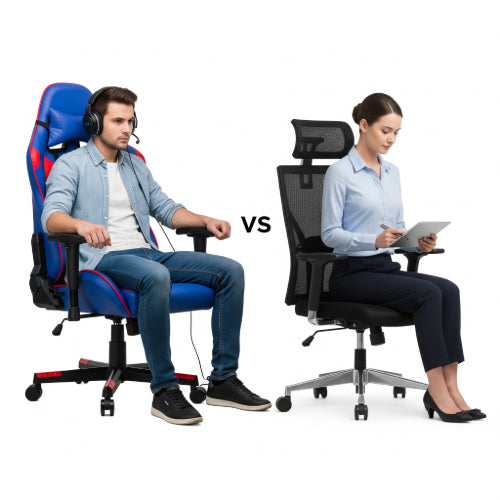
Gaming Chairs vs. Office Chairs: Which Is Better for Comfort?
In today's world, where many of us spend countless hours seated, the chair we choose can significantly impact our comfort, posture, and overall well-being. When it comes to ergonomic seating, two popular categories often go head-to-head: gaming chairs and office chairs. While both aim to provide support, they are designed with different primary users and priorities in mind.
So, which one is truly better for comfort? Let's break down their features and ideal use cases.
Gaming Chairs: The Race Car Inspired Seating
Gaming chairs typically boast a distinctive, often aggressive aesthetic, inspired by race car seats. They are marketed towards gamers who spend long sessions in front of a screen.
Common Features:
- Bucket Seat Design: Often feature elevated sides on the seat and backrest, mimicking racing seats.
- High Backrest with "Wings": Extends up to support the head and neck, often with pronounced "wings" for shoulder support.
- Lumbar and Neck Pillows: Almost universally include adjustable lumbar and neck support pillows.
- Recline Functionality: Many offer deep recline angles, sometimes almost flat.
- Adjustable Armrests: Often 2D, 3D, or even 4D adjustable armrests (up/down, front/back, pivot, inward/outward).
- Vibrant Colors and Branding: Frequently come in bold colors with prominent logos.
Pros for Comfort (and what to watch out for):
- Aggressive Lumbar/Neck Support: The included pillows can feel very supportive, especially for those who prefer a more pronounced arch in their lower back. However, fixed or overly firm pillows can sometimes push the spine into an unnatural curve.
- High Backrest for Neck Support: Good for leaning back and providing full spinal support, including the neck.
- Deep Recline: Allows for relaxed postures, which can be comfortable during breaks or for console gaming.
- Visual Appeal (for some): The sporty look is a significant draw for many.
Cons for General Office Comfort:
- "Bucket Seat" Restrictions: The raised edges on the seat can restrict natural leg movement and posture changes, leading to discomfort over long periods.
- Fixed Lumbar/Neck Support Issues: If the pillows aren't truly adjustable or don't suit your body type, they can force an uncomfortable posture.
- Less Breathable Materials: Often use PU leather, which can trap heat and lead to sweating, especially in warmer climates.
- Overly Firm Padding: Some gaming chairs prioritize durability over initial plushness, leading to a firm feel that might not be comfortable for everyone.
- Aesthetics: The aggressive design might not fit into a professional office environment.
Office Chairs: The Ergonomic Workhorse
High-quality office chairs are designed with ergonomics as their core principle, aiming to provide optimal support for sustained periods of sitting and promoting healthy posture.
Common Features:
- Highly Adjustable Components: Focus on adjustability for lumbar support (depth and height), seat height, seat pan depth, armrest height/pivot, and tilt tension.
- Breathable Materials: Often feature mesh backs and fabric seats for better ventilation.
- Contoured Seat Pans: Designed to distribute weight evenly and reduce pressure points.
- Synchro-Tilt Mechanism: Allows the backrest and seat to recline in a synchronized motion, maintaining proper posture.
- Subtler Aesthetics: Generally more understated and professional in appearance.
Pros for Comfort:
- Superior Adjustability for Personalization: This is their strongest suit. The ability to fine-tune every aspect of the chair to your unique body shape and posture is crucial for true long-term comfort and ergonomic health.
- Promotes Healthy Posture: Designed to support the natural curve of the spine, reducing strain on the back and neck.
- Breathability: Mesh and fabric materials significantly enhance comfort, especially during long hours.
- Even Weight Distribution: Contoured seats reduce pressure points on the thighs and buttocks.
- Durability and Longevity: High-end office chairs are built to withstand years of daily use.
Cons for Gaming Specifics:
- Less Aggressive Aesthetics: May not appeal to those seeking a "gamer" look.
- Typically Less Recline: While many recline, they usually don't go as flat as some gaming chairs, which might be a downside for console gaming from a relaxed position.
- Higher Price Point (for truly ergonomic models): Quality ergonomic office chairs can be expensive, but often offer a better return on investment for health.
The Verdict: Comfort for Your Core Activity
For general office work, prolonged typing, and maintaining a healthy posture over many hours, a well-designed ergonomic office chair is almost always the superior choice for comfort. Its extensive adjustability allows you to tailor the support precisely to your body, promoting better circulation and reducing the risk of strain and pain.
Gaming chairs, while offering some comfortable recline features and a distinctive look, often compromise on the nuanced ergonomic adjustability and natural movement necessary for truly healthy prolonged sitting. Their "bucket seat" design can restrict movement, and the effectiveness of their fixed lumbar/neck pillows varies greatly by individual.
When to consider a Gaming Chair:
- You primarily game and want a specific aesthetic.
- You frequently recline deeply for console gaming or media consumption.
- The included pillows happen to fit your natural lumbar/neck curve perfectly.
When to strongly consider an Office Chair:
- You spend many hours a day working at a desk (even if you also game).
- You prioritize long-term ergonomic health and customizable support.
- You need a professional aesthetic for your workspace.
- You tend to fidget or change positions frequently while seated.
Ultimately, true comfort comes from a chair that properly supports your body's natural alignment and allows for healthy movement. While gaming chairs prioritize a certain style and often a relaxed recline, high-quality ergonomic office chairs prioritize adaptability and postural support, making them the better investment for sustained comfort and health in a work setting.