Digital Signage vs Static Displays: Which is More Effective?
In today's visually saturated world, businesses are constantly looking for ways to capture attention, convey information, and engage their audience. When it comes to displaying messages in public spaces, offices, retail environments, or educational institutions, two primary methods stand out: static displays and digital signage. While static displays have been the traditional choice for decades, digital signage has emerged as a powerful, modern alternative.
But which one is truly more effective for your specific needs? Let's break down their differences and advantages.
Understanding the Basics
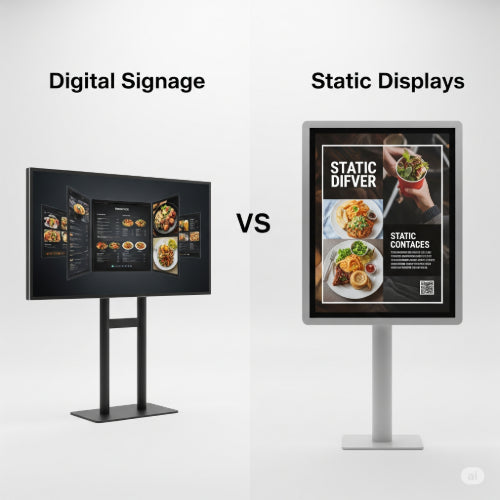
Static Displays: These are traditional, unchanging visual messages. Think of posters, printed banners, chalkboards, whiteboards, printed menus, or traditional billboards. Once created, their message remains constant until they are physically updated or replaced.
Digital Signage: This refers to electronic displays (like LCD, LED, or projection screens) that show dynamic content such as images, videos, animations, scrolling text, and interactive elements. The content can be easily updated and managed remotely, often in real-time.
Key Differences and Effectiveness Factors
Here's a comparison of their effectiveness across various aspects:
1. Content Flexibility & Dynamic Capabilities:
- Static Displays: Limited to a single, unchanging message. Updating content requires physical replacement, which can be time-consuming and costly.
- Digital Signage: Highly dynamic. Can display a variety of content types (video, animation, live feeds, social media, scrolling text). Content can be scheduled to change throughout the day, week, or based on specific events, allowing for highly targeted messaging. This flexibility significantly boosts engagement and relevance.
2. Engagement & Attention Span:
- Static Displays: Can be easily overlooked, especially in busy environments. Once seen, there's little new information to capture sustained attention.
- Digital Signage: The motion, vibrant colors, and constantly updated content naturally draw the eye and hold attention for longer. Video content, in particular, is highly engaging and can convey complex messages more effectively and quickly than static text.
3. Cost Over Time:
- Static Displays: Low initial cost per display. However, recurring costs for design, printing, and installation accumulate every time the message needs to change. For frequently updated information, this can become very expensive.
- Digital Signage: Higher initial investment for screens, media players, and software. However, once set up, the cost of updating content is minimal (often just staff time for content creation). Over the long term, especially for dynamic messaging, digital signage is often more cost-effective.
4. Real-time Updates & Responsiveness:
- Static Displays: Impossible to update in real-time. A last-minute price change, a new promotion, or an urgent announcement means new printing and installation.
- Digital Signage: Content can be updated instantly from a central location, even across multiple screens. This is invaluable for displaying timely information like emergency alerts, queue times, live news feeds, or daily specials.
5. Interactivity:
- Static Displays: No interactivity beyond looking at the display.
- Digital Signage: Can be made interactive with touchscreens, QR codes, or integration with mobile devices, allowing customers to explore products, find information, or even make purchases directly from the display. This significantly enhances the user experience.
6. Analytics & ROI Measurement:
- Static Displays: Difficult to measure effectiveness accurately. You can only make assumptions based on foot traffic or sales data.
- Digital Signage: Many digital signage platforms offer analytics tools that can track engagement metrics, such as content views, dwell time, and even interactions with touchscreens. This data allows businesses to measure ROI and optimize their messaging for better results.
7. Environment & Sustainability:
- Static Displays: Contribute to waste with frequent printing and disposal of materials.
- Digital Signage: More environmentally friendly in the long run as it reduces the need for paper and printing materials.
When to Choose Which
Choose Static Displays if:
- Your message is permanent or changes very rarely (e.g., your business name, core values displayed in a lobby).
- Your budget is extremely limited for initial setup.
- You operate in an environment where power access is difficult or impossible.
- The aesthetic of traditional signage is crucial for your brand.
Choose Digital Signage if:
- You need to display dynamic content that changes frequently (e.g., daily menus, promotions, schedules, news).
- You want to capture attention and increase engagement with compelling visuals.
- You need the ability to update content quickly and remotely.
- You want to integrate real-time information, social media, or interactive elements.
- You plan to measure the effectiveness of your displays.
- You are looking for a modern, professional image.
- You prioritize long-term cost efficiency for dynamic content.
Conclusion
While static displays still have their place for unchanging information, digital signage is undeniably more effective for dynamic, engaging, and measurable communication in almost any business context. Its ability to adapt, capture attention, and provide real-time updates makes it a powerful tool for modern businesses looking to stand out, inform, and influence their audience. Investing in digital signage is not just about upgrading your displays; it's about upgrading your communication strategy for the digital age.