Choosing the Right Media Converter for Your Network Setup
In today's interconnected world, a robust and reliable network is the backbone of any successful operation, whether it's a bustling office, a sprawling industrial complex, or a high-tech data center. As network technologies evolve, so does the need for seamless integration between different types of cabling and protocols. This is where media converters come into play – those unsung heroes that bridge the gap between disparate network segments.
But with a dizzying array of options on the market, how do you choose the right media converter for your specific network setup? Let's break down the key factors to consider.
What Exactly is a Media Converter?
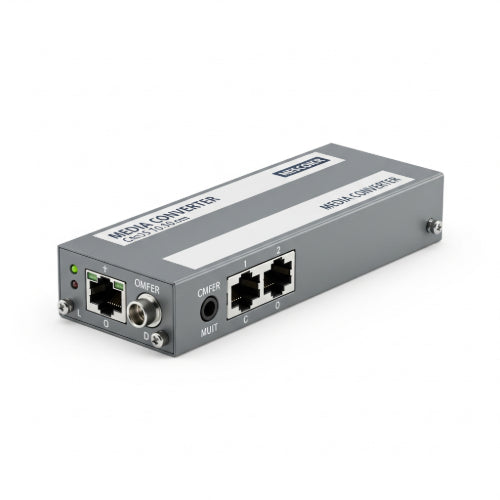
At its core, a media converter is a device that translates data signals from one cabling type to another. The most common application is converting Ethernet signals from copper cabling (like twisted-pair UTP) to fiber optic cabling, and vice-versa. This conversion allows you to extend network distances, overcome EMI/RFI interference, or integrate legacy equipment into newer fiber-based infrastructures.
Key Considerations When Choosing a Media Converter:
1. Copper to Fiber Conversion Type:
This is the most fundamental decision. What kind of copper connection do you have, and what kind of fiber do you need to convert to?
- Copper: Most commonly, you'll be dealing with Ethernet (10/100/1000Base-T). Ensure the media converter supports the speed of your existing copper network.
-
Fiber:
- Multimode Fiber (MMF): Ideal for shorter distances (up to a few kilometers) within buildings or campuses. It uses a larger core and is generally less expensive. Common types include 1000Base-SX and 10GBase-SR.
- Singlemode Fiber (SMF): Designed for much longer distances (tens to hundreds of kilometers), perfect for connecting buildings, cities, or even countries. It uses a smaller core and generally requires more precise optics. Common types include 1000Base-LX, 10GBase-LR, and beyond.
- Wavelengths: Fiber optic communication relies on specific wavelengths of light (e.g., 850nm, 1310nm, 1550nm). Ensure the converter's optical transceivers match the wavelengths of your fiber optic cables.
- Connector Type: Common fiber connectors include SC, ST, LC, and MTRJ. Verify compatibility with your existing fiber infrastructure.
2. Network Speed Requirements:
Do you need 10 Mbps, 100 Mbps, 1 Gbps (Gigabit Ethernet), 10 Gbps, or even higher speeds? The media converter must be able to support the desired data rate of your network segment. Upgrading your network? Consider a converter that can handle future speed requirements.
3. Distance and Environment:
- Distance: This is directly tied to your fiber type. For short runs, multimode might suffice. For long-haul connections, singlemode is essential. Always factor in a bit of overhead for future expansion or unexpected cable lengths.
-
Environment:
- Temperature: For industrial or outdoor deployments, look for industrial-grade media converters that can withstand extreme temperatures.
- Power: Consider how the converter will be powered (AC adapter, PoE/PoE+, DC input). PoE-powered converters can simplify installations in locations where power outlets are scarce.
- Mounting: Rack-mount, standalone, or DIN-rail mountable options are available. Choose based on your installation space and organization needs.
4. Managed vs. Unmanaged:
- Unmanaged Media Converters: These are plug-and-play devices that simply convert signals without offering any configuration options or network management capabilities. They are cost-effective and suitable for simple point-to-point conversions.
- Managed Media Converters: These offer advanced features like SNMP management, VLAN support, QoS (Quality of Service), and loopback testing. They provide greater control, monitoring, and troubleshooting capabilities, making them ideal for complex network deployments or mission-critical applications.
5. Advanced Features:
Depending on your specific needs, you might look for:
- PoE/PoE+ Passthrough: If you need to power an IP camera, access point, or other PoE-enabled device at the far end of your fiber link, a media converter with PoE passthrough can simplify your setup.
- Link Fault Passthrough (LFP): This feature helps detect link failures on one side of the converter and propagates that fault to the other side, allowing network management systems to quickly identify and resolve issues.
- Redundant Power Inputs: For critical applications, redundant power inputs provide an extra layer of reliability.
- SFP/SFP+ Slots: Converters with SFP (Small Form-Factor Pluggable) or SFP+ (enhanced SFP) slots offer flexibility. You can choose different transceivers for various fiber types, distances, and wavelengths, making them highly adaptable.
Don't Overlook the Details!
Before making your final decision, take the time to:
- Map out your network: Understand your current and future network topology.
- Consult specifications: Double-check compatibility of speeds, fiber types, and connectors.
- Read reviews: Learn from the experiences of other users.
- Consider reputable brands: Invest in quality components for long-term reliability.
Choosing the right media converter can seem daunting, but by carefully considering these factors, you can ensure a seamless, high-performing, and future-proof network infrastructure. Don't let a small component undermine the efficiency of your entire network – choose wisely!