The Future is Flexible: The Benefits of Modular Office Furniture for Dynamic Workspaces
The traditional, static office is rapidly becoming a relic of the past. Today's businesses, driven by evolving work styles, hybrid models, and the need for agile teams, demand workspaces that can adapt on the fly. This is where modular office furniture shines, offering an unparalleled solution for creating truly flexible and productive environments.
Modular furniture isn't just a trend; it's a strategic investment that empowers organizations to design offices that are responsive, efficient, and future-proof. Here’s a look at its undeniable benefits:
1. Unmatched Adaptability and Reconfigurability
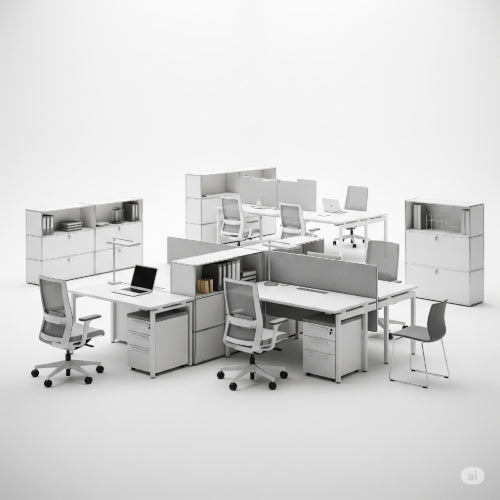
This is the cornerstone benefit. Modular furniture is designed in components that can be easily rearranged, added to, or removed.
- Rapid Reconfiguration: Need to switch from individual workstations to a collaborative team hub overnight? Modular systems make it possible without extensive construction or downtime.
- Scalability: As your team grows or shrinks, you can effortlessly add or remove modules to accommodate headcount changes, avoiding costly renovations.
- Diverse Work Zones: Easily create quiet focus areas, bustling brainstorming zones, private meeting pods, and relaxed lounge spaces, all within the same footprint.
2. Optimized Space Utilization
Every square foot in an office comes at a cost. Modular furniture helps you make the most of it.
- Efficient Layouts: By fitting together seamlessly, modular pieces can optimize even oddly shaped rooms or small areas, eliminating wasted space.
- Multi-functional Pieces: Many modular systems offer components that serve dual purposes, like storage units that double as seating or writable surfaces that also act as partitions.
- High-Density Solutions: When necessary, modular systems can be configured to comfortably accommodate more people in a given area without feeling cramped, often through clever storage and compact workstation designs.
3. Cost-Effectiveness and Long-Term Savings
While the initial investment might seem comparable to traditional furniture, modular systems offer significant long-term financial advantages.
- Reduced Renovation Costs: Avoid expensive and disruptive construction projects every time your office needs to change. Modular furniture handles reconfigurations internally.
- Extended Furniture Lifespan: Instead of replacing entire furniture sets, you can simply add or swap out individual components as needs evolve or wear occurs, prolonging the life of your investment.
- Depreciation Benefits: The ability to move and reconfigure furniture can sometimes offer different depreciation benefits compared to permanent fixtures.
4. Enhanced Collaboration and Communication
A flexible layout directly impacts how teams interact.
- Dynamic Team Workspaces: Easily create project-specific team areas that can expand or contract as team members join or leave, fostering fluid collaboration.
- Spontaneous Interactions: Designing open yet defined areas encourages informal conversations and knowledge sharing.
- Privacy On Demand: Integrate movable partitions or acoustic panels within modular systems to provide instant privacy for phone calls or focused work when needed, without building permanent walls.
5. Improved Employee Well-being and Satisfaction
A comfortable and adaptable workspace contributes significantly to employee morale.
- Personalization: Employees can often adjust their individual modular workstations (e.g., sit/stand options, reconfigurable storage) to suit their preferences, leading to greater comfort and control.
- Reduced Stress: A well-organized and aesthetically pleasing environment that adapts to work needs can reduce stress and improve overall job satisfaction.
- Attractive Workplace: A modern, flexible office signals a forward-thinking company that values its employees, helping with talent attraction and retention.
6. Sustainability Benefits
Many modular furniture systems are designed with environmental responsibility in mind.
- Less Waste: By reusing and reconfiguring components, you generate less waste compared to discarding old furniture during office redesigns.
- Recyclable Materials: Manufacturers often use recycled content and design for end-of-life recyclability.
- Local Sourcing: Depending on the manufacturer, modular components may be sourced more locally, reducing transportation emissions.
Embracing the Modular Advantage:
For businesses navigating the complexities of modern work, modular office furniture is more than just a purchase; it's a strategic enabler. It allows for the creation of dynamic, efficient, and resilient workspaces that can adapt to whatever the future holds, fostering productivity and collaboration every step of the way. Investing in modularity means investing in a truly flexible and sustainable work environment.