How Cloud-Based Firewalls Are Changing Cybersecurity
In the ever-evolving landscape of cybersecurity, businesses are constantly seeking more agile, scalable, and effective ways to protect their digital assets. Traditional, on-premise firewalls have long been the frontline defense, but with the pervasive shift to cloud computing, remote work, and distributed networks, a new guardian has emerged: the cloud-based firewall.
This revolutionary approach to network security, often delivered as Firewall-as-a-Service (FWaaS), is fundamentally changing how organizations approach their cybersecurity posture. Let's delve into how cloud-based firewalls are transforming the industry.
What Exactly is a Cloud-Based Firewall?
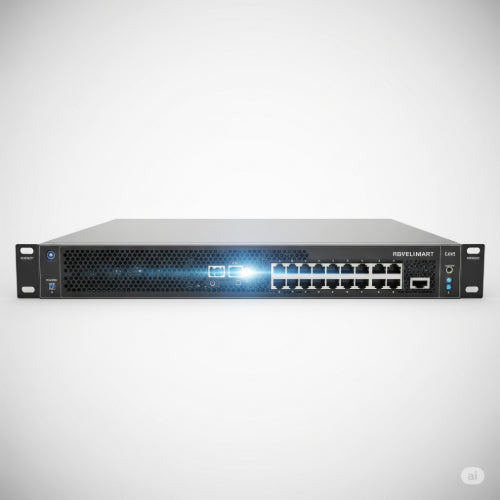
Unlike a traditional hardware firewall that sits physically on your premises, a cloud-based firewall is a software-defined security solution delivered through the cloud by a third-party provider. It acts as a virtual barrier, inspecting and filtering incoming and outgoing network traffic based on predefined security policies, just like its physical counterpart. However, its cloud-native architecture offers distinct advantages.
Key Ways Cloud-Based Firewalls are Reshaping Cybersecurity:
1. Unmatched Scalability and Elasticity: Traditional firewalls have fixed capacities. As your business grows, adds more users, expands into new cloud environments, or experiences spikes in traffic, you might need to invest in costly hardware upgrades and complex reconfigurations. Cloud-based firewalls, by contrast, are inherently scalable. They can automatically adjust to meet changing demands, seamlessly handling increased bandwidth and a growing number of users without creating network bottlenecks. This elasticity ensures consistent security protection, regardless of your operational scale.
2. Consistent Security for Distributed Workforces: The rise of remote and hybrid work models has shattered the traditional network perimeter. Employees access corporate resources from various locations, using diverse devices. On-premise firewalls struggle to provide consistent security for these distributed endpoints. Cloud-based firewalls, however, are location-independent. They extend the corporate firewall's protective capabilities to every user, device, and cloud application, ensuring that remote workers are as secure as their in-office counterparts. This creates a unified security policy that applies everywhere.
3. Reduced Operational Overhead and Cost Efficiency: Managing and maintaining traditional firewalls involves significant capital expenditure (CapEx) for hardware, software licenses, and the ongoing operational expense (OpEx) of dedicated IT staff for installation, configuration, patching, and upgrades. With FWaaS, the provider handles the infrastructure, maintenance, and updates. This shifts security from a capital investment to a predictable operating expense (subscription model), freeing up valuable IT resources to focus on strategic initiatives rather than routine firewall management.
4. Enhanced Threat Intelligence and Advanced Protection: Cloud-based firewall providers leverage vast global threat intelligence networks. They can analyze massive amounts of traffic data from numerous clients, identify emerging threats (like zero-day attacks and sophisticated malware), and rapidly push out updates and security policies to protect all their subscribers. This real-time threat intelligence and automated updating capability often outpaces what individual organizations can achieve with on-premise solutions. Many cloud firewalls also incorporate next-generation firewall (NGFW) capabilities like deep packet inspection, intrusion prevention systems (IPS), application control, and URL filtering.
5. Simplified Management and Centralized Visibility: Managing firewalls across multiple branch offices, data centers, and cloud environments can be complex. Cloud-based firewalls offer centralized management consoles, often a "single pane of glass," from which IT teams can configure, monitor, and enforce security policies across the entire distributed network. This streamlined management enhances visibility into network traffic and security events, making it easier to identify and respond to threats.
6. Seamless Integration with Cloud Ecosystems and SASE: Cloud-based firewalls are designed to integrate seamlessly with various cloud platforms (IaaS, PaaS, SaaS applications). They are also a foundational component of the Secure Access Service Edge (SASE) model, which converges networking and security functions into a single, cloud-delivered service. This integration simplifies security architecture and provides a comprehensive approach to securing modern, cloud-centric environments.
The Future of Cybersecurity is Cloud-Native
The shift to cloud-based firewalls is more than just a technological upgrade; it's a paradigm shift in cybersecurity. By offering unparalleled scalability, consistent protection for a mobile workforce, reduced costs, advanced threat intelligence, and simplified management, cloud-based firewalls are enabling organizations of all sizes to build more resilient and adaptable security postures for the digital age. As businesses continue their cloud migration journeys, FWaaS will undoubtedly remain a critical pillar in their cybersecurity strategy.