Green Cooling: How to Save Energy While Cooling Your Office Equipment
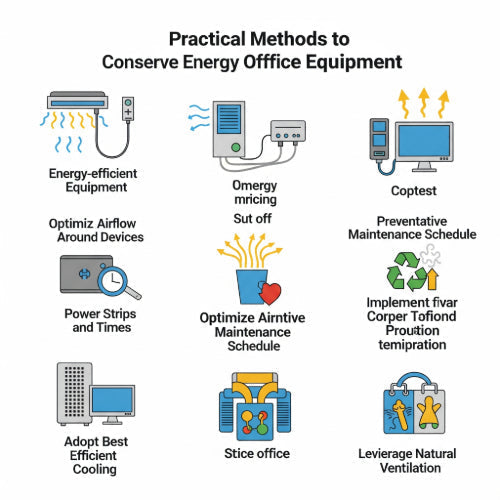
In today's technology-driven world, office equipment like servers, computers, and network devices generate a significant amount of heat. Effective cooling is crucial to ensure their optimal performance and longevity. However, traditional cooling methods can be energy-intensive and costly. Embracing green cooling strategies not only helps reduce your energy consumption and lower operational costs but also contributes to a more sustainable and environmentally responsible workplace.
Here’s a guide on how to save energy while effectively cooling your office equipment:
1. Optimize Equipment Placement and Airflow:
- Strategic Layout: Avoid overcrowding equipment. Ensure adequate space around each device to allow for proper air circulation. Position equipment away from direct sunlight and heat sources like windows.
- Clear Pathways: Keep vents and airflow pathways clear of obstructions like papers, cables, and other clutter. Proper airflow allows cool air to reach the equipment and hot air to escape efficiently.
- Hot and Cold Aisles: In server rooms or areas with multiple racks, implement a hot and cold aisle containment strategy. This involves arranging racks so that the fronts (cold air intake) face each other, forming a "cold aisle," and the backs (hot air exhaust) face each other, creating a "hot aisle." This separation improves cooling efficiency and reduces the mixing of hot and cold air.
2. Implement Smart Cooling Technologies:
- Variable Speed Fans: Consider using equipment with variable speed fans that adjust their speed based on the heat generated. This reduces energy consumption when cooling demand is low.
- Temperature and Humidity Monitoring: Install sensors to monitor the temperature and humidity levels in your equipment rooms. This data can help you optimize cooling settings and identify potential hotspots.
- Smart Thermostats and Controls: Utilize smart thermostats that allow for automated temperature adjustments based on schedules and occupancy. Integrate cooling systems with building management systems for more efficient control.
3. Focus on Source Heat Reduction:
- Virtualization: Consolidate physical servers through virtualization. Running multiple virtual servers on a single physical machine reduces the overall number of devices generating heat.
- Upgrade to Energy-Efficient Equipment: When purchasing new equipment, prioritize models with energy-efficient certifications. These devices are designed to generate less heat and consume less power.
- Regular Maintenance: Dust and debris buildup on equipment can impede airflow and reduce cooling efficiency, causing devices to overheat and work harder (consuming more energy). Implement a regular cleaning schedule for all IT equipment.
4. Explore Alternative Cooling Methods:
- Free Cooling (Economizers): In suitable climates, consider using outside air to cool equipment when the ambient temperature is low enough. Economizers can significantly reduce the reliance on traditional air conditioning systems.
- Liquid Cooling: For high-density environments like data centers, liquid cooling can be a more efficient and targeted cooling solution compared to air cooling. It involves circulating a coolant fluid through heat sinks attached to components, drawing heat away more effectively.
- Rear Door Heat Exchangers: These units are mounted on the back doors of server racks and use chilled water to remove heat directly at the source, improving cooling efficiency without significantly altering the room's overall temperature.
5. Educate and Encourage Responsible Practices:
- Power Down Idle Equipment: Encourage employees to power down computers, monitors, and other peripherals when they are not in use. Even in sleep mode, devices can generate some heat.
- Minimize Unnecessary Equipment: Regularly audit your office equipment and remove any unused or outdated devices that are still drawing power and generating heat.
By implementing these green cooling strategies, businesses can significantly reduce their energy consumption, lower cooling costs, extend the lifespan of their valuable IT equipment, and contribute to a more sustainable future. Embracing a holistic approach to cooling, from optimizing airflow to adopting smart technologies, is key to achieving both environmental and economic benefits.