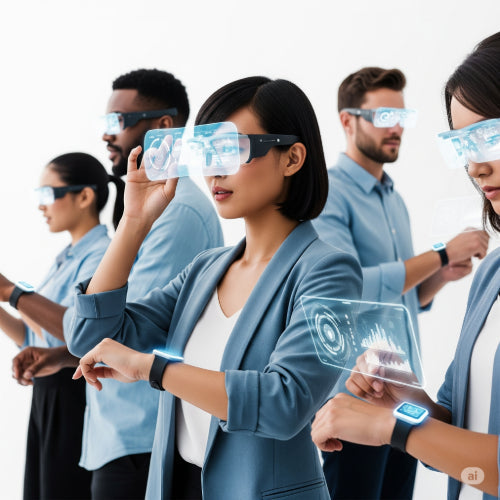
Beyond the Wristband: How Wearable Tech Will Transform the Workplace
For years, "wearable tech" mostly conjured images of fitness trackers on our personal wrists. But the landscape is rapidly expanding, and sophisticated wearable technology is poised to revolutionize the modern workplace. From enhancing productivity and safety to fostering collaboration and even monitoring well-being, these discreet yet powerful devices are moving beyond consumer novelties to essential professional tools.
This isn't about replacing human interaction, but augmenting it. Here's how wearable tech will transform the way we work:
1. Supercharging Productivity and Efficiency:
The ability to access information and interact hands-free is a game-changer for many roles.
-
Smart Glasses for Frontline Workers: Imagine technicians repairing complex machinery with augmented reality (AR) overlays projected directly onto their field of vision, showing schematics, step-by-step instructions, or even allowing a remote expert to "see what they see" and guide them in real-time. This reduces errors, speeds up repairs, and minimizes downtime.
-
Seamless Communication for Mobile Professionals: Smartwatches and smart rings will enable instant notifications, quick voice replies, and even discreet call handling without needing to pull out a phone. For sales reps on the go or field engineers, this means quicker responses and more focused interactions.
-
Optimized Workflows: Wearables equipped with speech-to-text capabilities can allow professionals to dictate notes, create task lists, or even complete forms hands-free, streamlining data entry and freeing up their hands for other tasks.
2. Elevating Workplace Safety and Health:
Wearable tech is becoming an invaluable guardian in hazardous environments and a proactive partner in employee well-being.
-
Real-time Hazard Alerts: In manufacturing, construction, or logistics, smart helmets, vests, or wristbands can monitor environmental factors (e.g., gas leaks, extreme temperatures, noise levels) and instantly alert workers to potential dangers. Proximity sensors can prevent collisions with heavy machinery.
-
Fatigue and Biometric Monitoring: Wearable sensors can continuously track heart rate, body temperature, posture, and even fatigue levels. This data can alert workers and supervisors to potential burnout risks, encourage breaks, or even prevent accidents caused by exhaustion, leading to a healthier and safer workforce.
-
Emergency Response: In the event of an accident or fall, wearables with GPS tracking and impact detection can automatically send alerts to emergency services or designated personnel, ensuring quicker response times and potentially saving lives.
3. Enhancing Collaboration and Training:
Beyond individual productivity, wearables are fostering new ways for teams to connect and learn.
-
Immersive Remote Collaboration: AR glasses can create shared virtual spaces where geographically dispersed teams can interact with 3D models, brainstorm on virtual whiteboards, and feel a greater sense of presence than traditional video calls allow.
-
Experiential Training: VR headsets offer highly realistic training simulations for complex or high-risk scenarios, allowing employees to practice procedures, make mistakes in a safe environment, and gain hands-on experience without real-world consequences. This accelerates skill acquisition and improves knowledge retention.
-
Contextual Information Sharing: During collaborative tasks, AR can overlay relevant data or instructions onto shared physical objects, facilitating clearer communication and more efficient problem-solving.
4. The Move Towards Discreet and Intuitive Design:
The future of wearables in the office won't be clunky gadgets; it will be sleek, integrated, and almost invisible.
-
Smart Rings and Seamless Integration: The trend is towards minimalist, non-intrusive devices like smart rings that offer health monitoring, contactless payments, and gesture control without a display.
-
Smart Clothing: Embedded sensors in uniforms or regular clothing can discreetly monitor biometrics or environmental conditions, providing data without requiring a separate device.
-
AI-Powered Personalization: Wearables will increasingly leverage AI to learn individual preferences, anticipate needs, and provide proactive, personalized insights and assistance.
Challenges and Ethical Considerations:
While the benefits are clear, widespread adoption of wearable tech in the workplace also brings important considerations:
-
Data Privacy and Security: The collection of biometric and behavioral data raises significant privacy concerns. Transparent policies, clear consent, and robust data security measures are paramount to building employee trust.
-
Employee Acceptance: Forcing employees to wear devices without clearly demonstrating the benefits to them (not just the company) can lead to resistance. Education and opt-in programs will be key.
-
Interoperability: Ensuring different wearable devices and platforms can seamlessly integrate with existing enterprise systems will be a crucial technical hurdle.
-
Digital Divide: Access to and familiarity with these technologies may vary, requiring equitable implementation strategies.
The workplace is on the cusp of an exciting transformation. Wearable technology, far from being a passing fad, is evolving into a powerful suite of tools that will redefine productivity, safety, and collaboration. As these devices become more advanced, discreet, and integrated, they will undoubtedly play an increasingly vital role in shaping the smart, connected, and human-centric offices of tomorrow.