Server Rack and Cable Management Buying Guide: How to Choose
Understanding Server Racks and Cabling: The Foundation of IT Infrastructure
Server racks and cable management systems are the backbone of any organized IT environment, from small office server closets to enterprise data centers. But with dozens of rack types, depths, and cable management options available, choosing the right combination can feel overwhelming. Get it wrong, and you'll face airflow problems, maintenance headaches, or equipment that simply won't fit.
This guide breaks down the key decisions: which rack type suits your environment, how to size for current and future needs, and which cable management features actually matter. At Tecisoft, we've helped businesses of all sizes build clean, scalable rack infrastructure that grows with their technology needs.
Types of Server Racks: Open Frame vs. Enclosed vs. Wall Mount
Open Frame Racks
Open frame racks provide maximum airflow and easy access, making them ideal for controlled environments like data centers and dedicated server rooms.
2-Post Open Frame:
- Best for lightweight equipment (switches, patch panels, KVM drawers)
- Weight capacity: 200-800 lbs
- Minimal footprint
- Easy front and rear access
4-Post Open Frame:
- Supports heavy servers, UPS units, storage arrays
- Weight capacity: 1,500-3,000 lbs
- Superior stability for deep equipment
- Adjustable depth (24"-40"+ typical)
Enclosed Server Cabinets
Enclosed cabinets offer security, dust protection, and better cable concealment for office environments and less secure locations.
Key features:
- Lockable front and rear doors (key or combination locks)
- Perforated doors for airflow without sacrificing security
- Solid side panels for protection
- Better noise containment
- Cable management built into frame design
Wall Mount Racks
Wall mount solutions maximize floor space in small offices, telecommunications closets, and retail environments.
Specifications:
- Heights: 2U-22U (compact to medium capacity)
- Depths: 12"-25" (shallow to accommodate most switches)
- Weight capacity: 60-800 lbs depending on size
- Hinged or fixed mounting options
Critical Sizing Considerations
Rack Units (U) and Height Planning
Each rack unit equals 1.75 inches of vertical mounting space. Plan your U count carefully:
Calculating Total U Requirements:
- List all current equipment with U heights
- Add 25-30% for future expansion
- Reserve 2-4U for cable management panels
- Include space for UPS, KVM, and monitoring equipment
Common Rack Heights:
- Small office: 12U-25U wall mount or open frame
- Growing business: 25U-42U enclosed cabinet
- Data center: 42U-48U for maximum density
Depth Requirements That Actually Matter
Rack depth determines what equipment you can install and how much cable management space you'll have.
Standard Depth Categories:
- Shallow (24"-29"): Basic switches, patch panels, lightweight servers
- Medium (30"-35"): Most 1U-2U servers, mid-range networking gear
- Deep (36"-42"+): High-end servers, storage arrays, extensive cable management
Pro tip: Add 3-4 inches to your deepest equipment for proper cable routing behind devices.
Weight Capacity Reality Check
Don't just look at total weight—consider weight distribution:
- 1U servers: 40-80 lbs each
- 2U servers: 60-120 lbs each
- UPS units: 100-300+ lbs
- Storage arrays: 150-400+ lbs
Safety rule: Size racks for 80% of maximum rated capacity to account for uneven loading and future additions.
Essential Cable Management Features
Vertical Cable Management
Finger ducts: Simple cable routing along rack sides
Vertical managers: Dedicated channels with covers for clean appearance
D-ring managers: Flexible mounting points for various cable types
Horizontal Cable Management
1U and 2U cable management panels: Route cables between devices
Pass-through panels: Clean entry/exit points for external cables
Patch panel integration: Dedicated space for network terminations
Power Cable Management
PDU mounting rails: Vertical or horizontal power distribution
Power cable trays: Separate power from data cables
Cord retention: Prevent accidental disconnections
Best Practices for Clean Cable Runs
- Separate power and data cables to prevent interference
- Use appropriate cable lengths—too short creates stress, too long creates clutter
- Label everything at both ends
- Route cables in organized bundles with proper tie-downs
- Leave service loops for equipment maintenance
Choosing the Right Solution for Your Environment
Small Office/Home Office (5-15 devices)
Recommended: 12U-18U wall mount or compact open frame
- Shallow depth (24"-28") for switches and small servers
- Basic cable management (finger ducts, 1U panels)
- Lockable options for shared spaces
- Budget: $200-800
Growing Business (15-30 devices)
Recommended: 25U-35U enclosed cabinet
- Medium depth (30"-36") for flexibility
- Integrated vertical and horizontal cable management
- Perforated doors for airflow
- Room for expansion and UPS
- Budget: $800-2,500
Enterprise/Data Center (30+ devices)
Recommended: 42U+ enclosed cabinet or 4-post open frame
- Deep configuration (38"-42"+) for high-end equipment
- Advanced cable management with dedicated pathways
- Hot/cold aisle compatibility
- Multiple rack coordination
- Budget: $2,000-8,000+ per rack
Environmental and Security Factors
Cooling and Airflow
Enclosed cabinets: Require perforated doors (60-70% open area) and may need supplemental fans
Open frames: Provide natural convection but need proper room HVAC
High-density environments: Consider containment systems and precision cooling
Security Requirements
Public/shared spaces: Fully enclosed cabinets with robust locks
Dedicated server rooms: Open frames acceptable with room-level security
Compliance environments: May require specific lock types and audit trails
Future-Proofing Considerations
- Adjustable mounting rails for different equipment depths
- Removable side panels for major reconfigurations
- Scalable cable management that grows with your network
- Power capacity planning (current draw + 50% headroom)
Frequently Asked Questions
What's the difference between a server rack and a network cabinet?
Server racks are typically open-frame designs optimized for airflow and heavy equipment in controlled environments. Network cabinets are enclosed units with doors and panels, designed for security and dust protection in office settings. Both use the same 19-inch mounting standard.
How do I calculate the right rack depth?
Measure your deepest piece of equipment, add 4-6 inches for cable management behind the device, and add another 2-3 inches if you need front cable access. Most businesses find 32"-36" depth handles their current and near-future needs.
Can I mix different equipment brands in one rack?
Yes, as long as equipment follows the standard 19-inch rack mount specification. However, pay attention to depth requirements, power consumption, and airflow patterns when mixing different device types.
How much cable management do I really need?
At minimum, plan for vertical cable management on both sides and one horizontal cable management panel per 10U of active equipment. High-density environments benefit from dedicated cable management racks adjacent to equipment racks.
What's the best way to organize power and data cables?
Keep power cables on one side of the rack and data cables on the other when possible. If you must run them together, maintain 6+ inches separation and use shielded cables for sensitive data connections.
When should I choose a wall mount vs. floor-standing rack?
Wall mount works for up to 20U of lightweight equipment in space-constrained areas. Choose floor-standing for heavier loads, higher capacity needs, or when you need easy access to all sides of the equipment.
Making Your Final Decision
Choose your rack infrastructure based on four key factors: your current equipment inventory, security requirements, available space, and growth timeline. Most businesses benefit from slightly oversizing their initial investment to avoid costly migrations later.
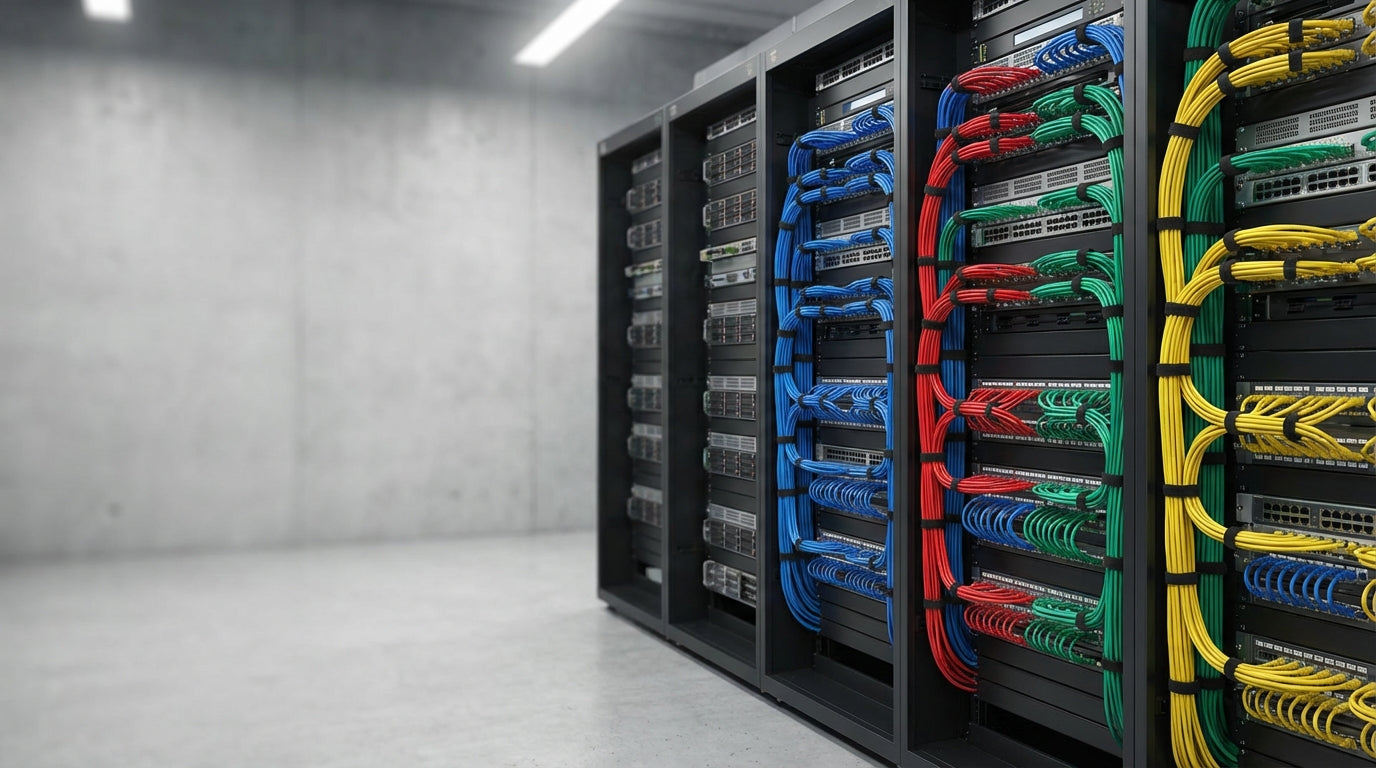
For cable management, prioritize vertical management and horizontal pass-through panels over complex routing systems you may never use. Clean, simple organization beats elaborate cable art every time.
Next steps checklist:
- Inventory current equipment dimensions and weights
- Measure your available floor space and ceiling height
- List your security and access requirements
- Calculate power needs (current + 50% growth)
- Plan cable pathways between racks and network infrastructure
- Compare 2-3 solutions that meet your capacity and budget
Ready to build your ideal rack setup? Explore our complete server rack and cable management range at Tecisoft, where our infrastructure specialists can help you design a solution that scales with your business growth.
Ready to find the right solutions for your needs?
Explore Collection